

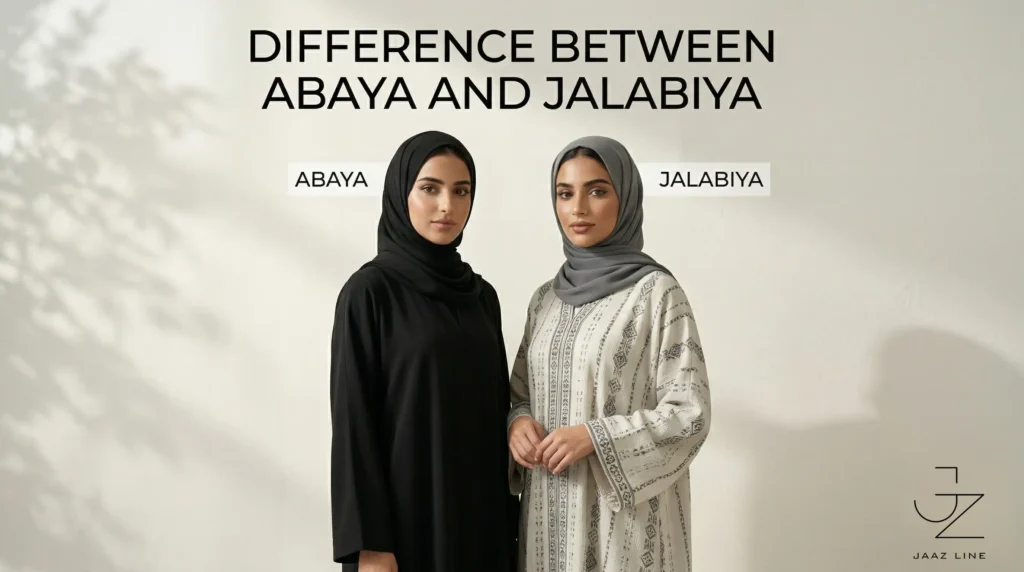
The difference between abaya and jalabiya plays a key role in how women across the Middle East and beyond dress with both comfort and modesty. These garments are not interchangeable, even if they share loose silhouettes and flowing fabrics. The difference between abaya and jalabiya in Middle East traditions reflects climate, occasion, and social norms. Knowing these distinctions allows for smarter choices, especially when selecting abaya and jalabiya fabrics suitable for daily wear.
What is the definition of abaya?
The difference between abaya and jalabiya becomes clearer once you know what an abaya really is in daily life. An abaya is simply a loose outer piece that you wear over your clothes before going out. It is not your primary attire; it merely conceals whatever you are already wearing underneath. Most women use it as something quick and practical. You simply put it on before leaving the house, and that’s it. It is usually black, but not always.
What is the definition of a jalabiya?
The difference between an abaya and a jalabiya starts to feel obvious when you think about how a jalabiya is actually used. A jalabiya is not something you wear over clothes. It is the outfit itself. You just wear it directly, and that’s enough without adding layers. Most people wear it at home or in comfortable places. It is loose, light, and easy to move in, which is why it’s popular for daily use.
What is the difference between an abaya and a jalabiya?
| Element | Details | Insight |
|---|---|---|
| Cultural Context | The traditional difference between abaya and jalabiya comes from culture. The abaya is linked to public appearance and modesty, while the jalabiya is more about comfort at home or in relaxed settings. | The difference between abaya and jalabiya is mainly about how each one is used. The abaya is something you wear over your clothes outside, while the jalabiya is the actual outfit you wear on its own. |
| Style | In terms of style, the modern abaya vs jalabiya differences are more visible now. Abayas are becoming more tailored and minimal, while jalabiyas are still more colourful, printed, and expressive. | When you look at the modesty difference between abaya and jalabiya, the abaya usually offers more structured coverage, especially when stepping outside, while the jalabiya feels more open and casual. |
| Fabric | Fabric choice also plays a role. Both use light materials, but abaya and jalabiya fabrics are chosen differently depending on use, with abayas focusing more on flow and structure. | The difference between abaya and jalabiya in Middle East daily life is clear. One is part of going out; the other is part of staying comfortable indoors or in familiar environments. |
The best types of fabrics used in the abaya and jalabiya
- The first thing to understand is that the difference between abaya and jalabiya affects the fabric choice a lot, because each one is worn in a completely different way.
- An abaya usually needs a fabric that does not cling too much but still falls nicely. It should feel light but also provide a clean and put-together look when worn outside.
- That is why crepes are very common. It is simple, comfortable to wear, and does not require much effort to look neat during the day.
- Some people prefer softer fabrics like nidha, especially when they want something lighter on the body, particularly in hot weather.
- A jalabiya is much more about comfort, so cotton is often the easiest choice. It feels soft, breathable, and works well for long hours at home.
- Linen is also a beneficial choice, especially in the summer. It may wrinkle a bit, but it keeps the body cool and comfortable.
Find your abaya or jalabiya at JAAZLINE
Looking for a flowing outer layer? Explore our abaya collection in Bahrain. For a dress-style outfit, browse the jalabiya collection. Check each product’s fabric, lining, measurements and delivery details before choosing.
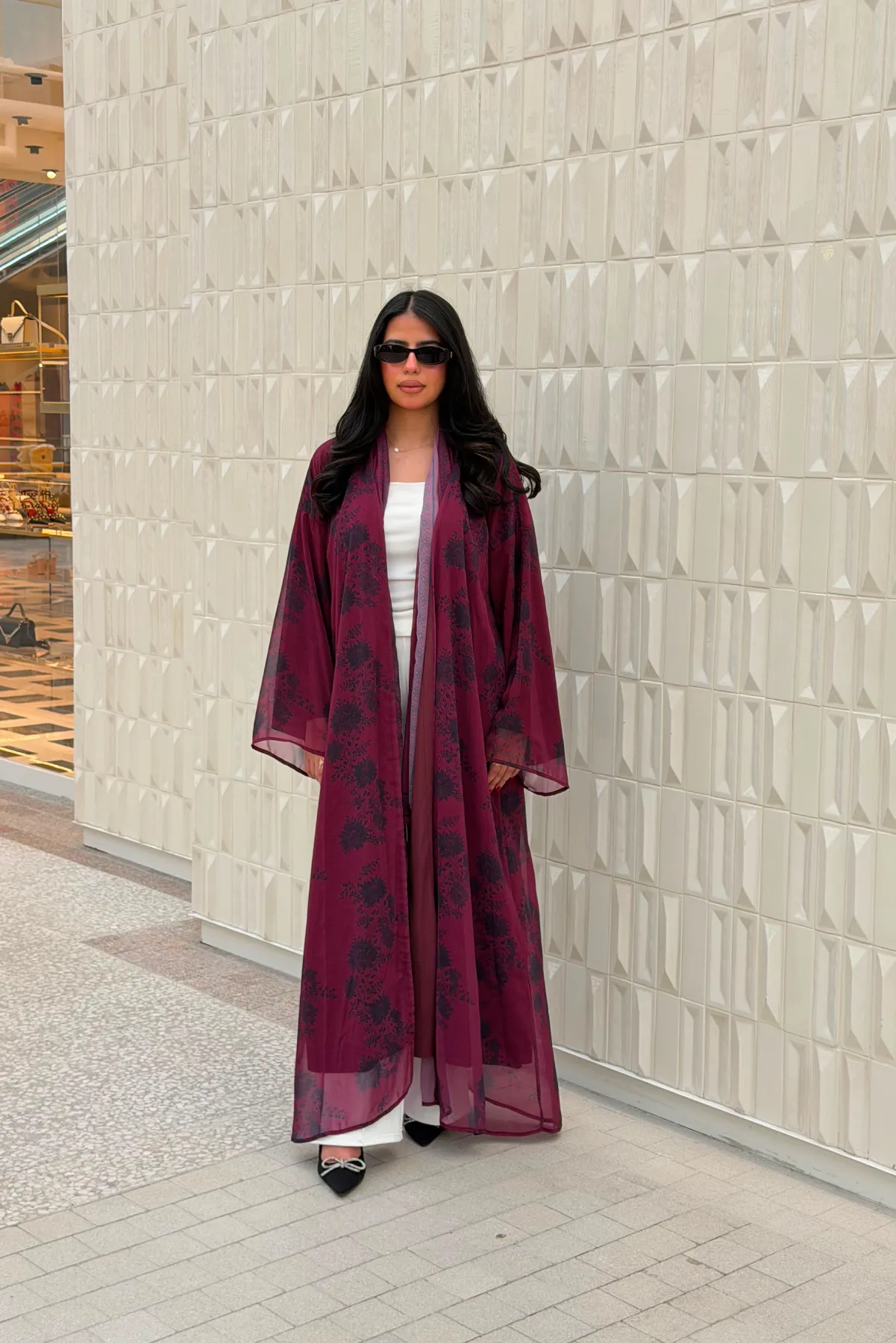
View the maroon chiffon abaya and choose your length. Prefer an artistic print? Discover the Art Chiffon Abaya with a matching shayla. Select your preferred length on the product page to check current availability.
When should you wear an abaya or a jalabiya?
- The main difference between abaya and jalabiya is when you wear each.
- If you are going outside, the abaya is usually the simplest choice. You just put it on over your clothes and leave.
- It does not require much thought. It gives you a neat look without changing what you are already wearing underneath.
- A jalabiya is different because it is the outfit itself, not something you layer.
- Most people wear it at home or in casual settings.
- It is also common when visiting close family, where things are more informal and comfortable.
- In hot weather, a jalabiya often feels lighter, so it works better if you are wearing it for long hours.
Latest trends in abayas and jalabiyas
People are not really looking for complicated designs anymore. Now, comfort and lightness are key, and you can see how abayas and jalabiyas are changing to focus on these qualities.
ALHANOOF
- This piece follows the soft colour trend, which feels lighter than the usual dark tones.
- It works well for daytime wear without feeling too heavy or formal.
- The overall look is simple but still feels put together without effort.
ALJAZI
- A more classic option that leans towards the traditional black abaya style.
- It gives that clean and structured look people still rely on for going out.
- Easy to wear with almost anything underneath without thinking too much.
E26-D91 AMINA
- This design reflects the move towards softer fabrics and lighter detailing.
- The pattern adds a bit of character without making it feel too much.
- Suitable for occasions where you want something calm but not plain.
E26-D92 HAYA
- A more expressive style compared to simpler pieces.
- The design stands out a bit more, which fits with modern jalabiya trends.
- The design remains comfortable to wear, albeit with a slightly more noticeable appearance.
How to style an abaya or a jalabiya
- The first thing to keep in mind is that the difference between abaya and jalabiya affects how you style each one, because they are worn in completely different ways.
- An abaya is worn over your clothes, so styling it is usually simple. You just keep what’s underneath clean and not too busy.
- A jalabiya is the outfit itself, so your choice matters more since it is what people actually see.
- If you want an easy look, neutral abaya colours always work. They match almost anything without needing much effort.
- Jalabiyas give you more freedom, so you can go for prints or colours that reflect your mood.
- One of the modern abaya vs jalabiya differences is that abayas are now more minimal, while jalabiyas feel more expressive.
- Accessories with abayas are better kept light, but with jalabiyas you can add small details without overdoing it.
- Fabric plays a big role, especially when choosing abaya and jalabiya fabrics that feel right for daily use.
Common abaya and jalabiya problems and practical solutions
- The difference between abaya and jalabiya shows even in common issues, as each one comes with its own small challenges in daily use.
- Sometimes an abaya feels too heavy, especially in hot weather. Choosing lighter fabrics can make it much easier to wear.
- A common issue is the fabric sticking to the body. This usually happens with the wrong material, so breathable options work better.
- Some abayas lose their shape after a few uses. The issue often comes down to fabric quality, so better materials help avoid this.
- Jalabiyas can feel too loose in a way that is not comfortable. Picking the right size or a slightly shaped design can fix that.
- Colours may fade after repeated washing. Using gentle cleaning methods helps keep the fabric looking fresh for longer.
Where to find the best abayas and jalabiyas?
- Once you get the difference between abaya and jalabiya, you stop buying random pieces and start choosing what you will actually wear.
- Most people don’t need a big collection; they just need a few pieces that feel right every time they put them on.
- If something looks good but feels heavy or annoying after an hour, you simply won’t wear it again.
- A desirable place is not the one with the most options, but the one where everything feels wearable.
- That’s exactly what you notice with Jaazline, the pieces feel like they’re made for real use, not just photos.
- You pick something, wear it, and it just works without needing to adjust or rethink it.
Conclusion
Once you get the difference between abaya and jalabiya, you stop overthinking it. Some days you just grab an abaya and go; other days you stay in something more relaxed like a jalabiya. It really comes down to how your day looks and what feels comfortable at the time. If you want pieces that you’ll actually wear without thinking twice, you’ll find that kind of simplicity on Jaazline , where everything feels effortless, practical, and suited to everyday life.
FAQS
What exactly is the difference between abaya and jalabiya in daily use?
The abaya is something you wear over your clothes when you go out. The jalabiya is the outfit itself, usually worn for comfort.
Which one is more comfortable to wear for long hours?
A jalabiya, definitely. It’s lighter and easier. The abaya depends on what you’re wearing under it.
Can a jalabiya be worn outside?
Yes, if the design is simple and neat. Some styles are made for going out, not just staying at home.
What fabrics work best in hot weather?
Anything light. Cotton and linen feel better for jalabiyas, while abayas need soft, flowy fabrics.
